Farmers Branch, TX
Water Filtration in Farmers Branch, Starting With a Test
We test the water at your tap, explain what the numbers mean, then install only what fixes the problem: whole-house carbon filtration for chlorine taste, under-sink reverse osmosis for drinking water, sediment filters, or a softener when hardness justifies one. We work in homes across Farmers Branch, Carrollton and Addison.
- Readings shown before advice
- Written line-item estimates
- Permits pulled when required
- Cleanup before we leave
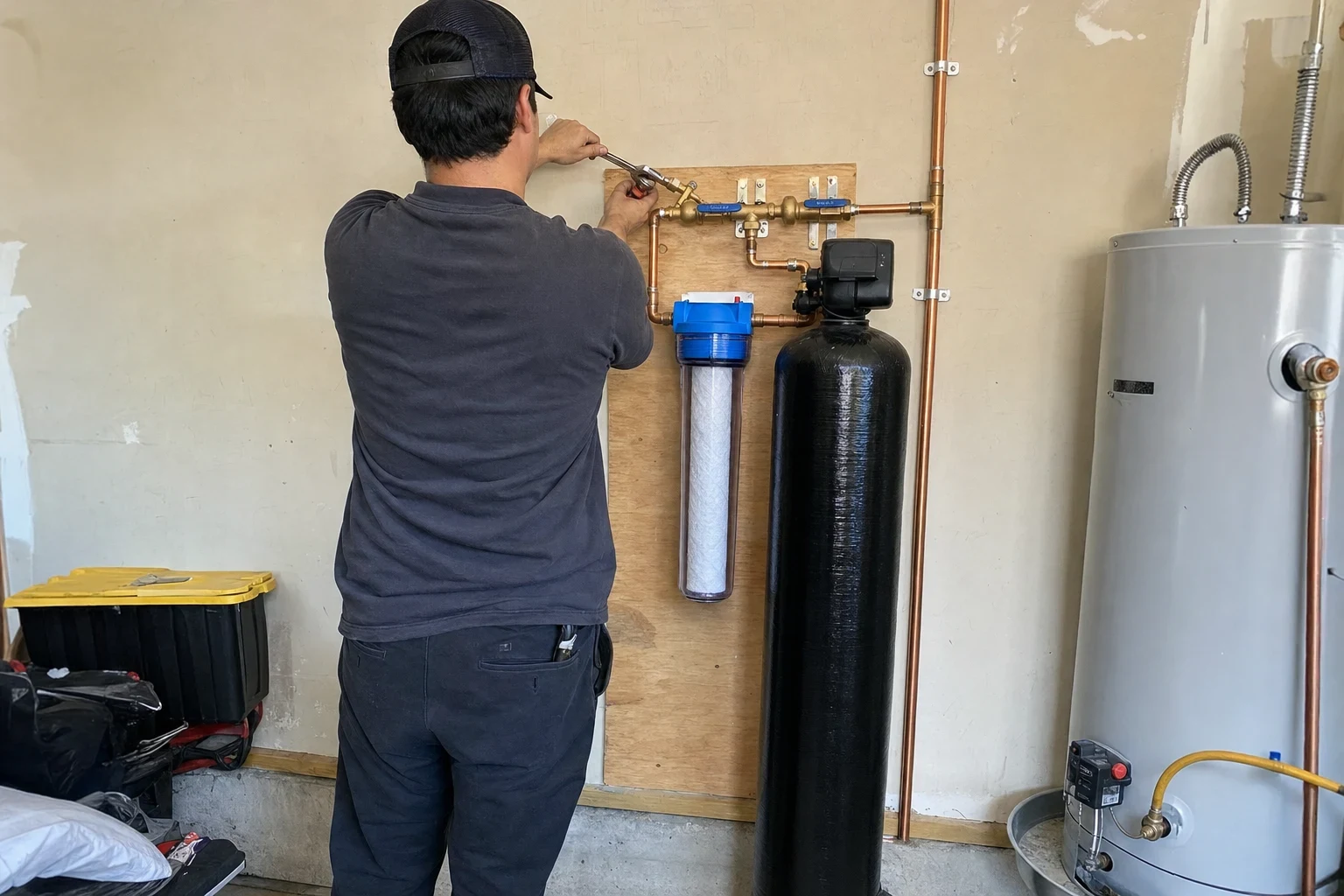
What Drives the Cost of a Filtration Install
Every install is priced differently, and we will not give a number until we have checked your water and your plumbing. These are the factors that change the total most.
After the test and a look at your pipes, you get a written estimate listing every part and labor charge, so you can compare it item by item.
- Which system you choose
- An under-sink reverse osmosis unit with its own faucet is less work than a whole-house carbon tank serving every fixture. A softener also brings a brine tank, a drain hookup and an outlet.
- Flow rate and number of people
- Tanks and cartridges are sized in gallons per minute. When several bathrooms run at the same time, the media bed has to be bigger so the shower keeps its pressure.
- Pipe type and how easy it is to reach
- Copper, PEX and older galvanized pipe each need their own fittings. A main hidden behind finished drywall or tucked away in the garage takes more labor than one out in the open.
- Permits and code requirements
- Connecting to the main line may call for a permit and a drain air gap that prevents backflow. If your city requires a permit, its fee shows up as a separate line on the estimate.
- Choice of media and cartridges
- Catalytic carbon is pricier than standard carbon, and RO membranes differ in rejection rate and capacity. We point out where the higher price gets you something real and where it does not.
Filtration Matched to What Is in Your Water
Most homes here get treated city water that already meets drinking standards, so the real questions are taste, odor, scale and what your own pipes add on the way to the faucet. Water testing tells us which of those applies. From there we install whole-house carbon filtration, under-sink reverse osmosis, iron and sediment filtration, or a water softener after a hardness test, and we keep it working with filter replacement and maintenance.
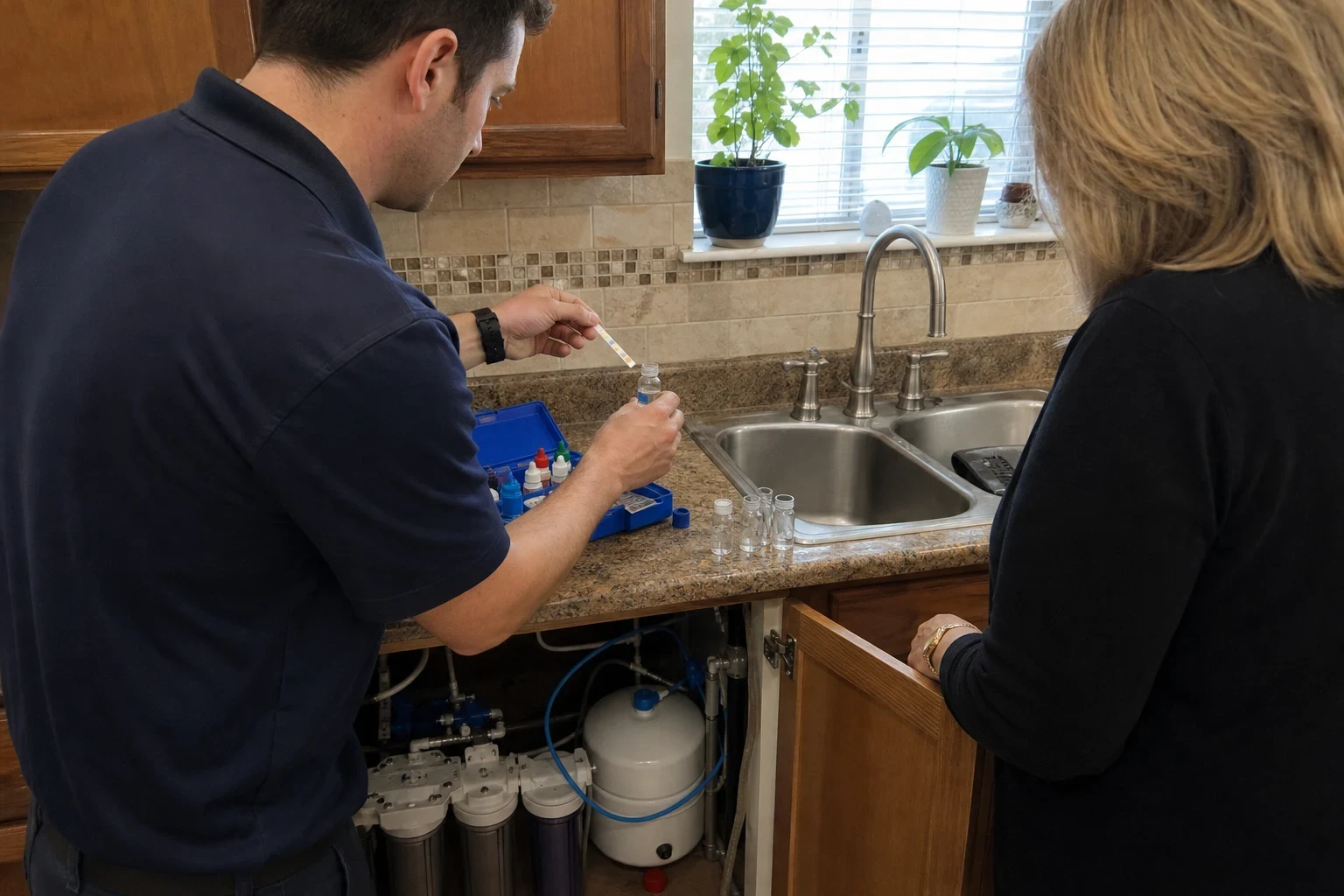
Water testing
In-home and lab water testing that measures hardness, disinfectant, iron and lead, so any filter you buy is matched to a number, not a guess.
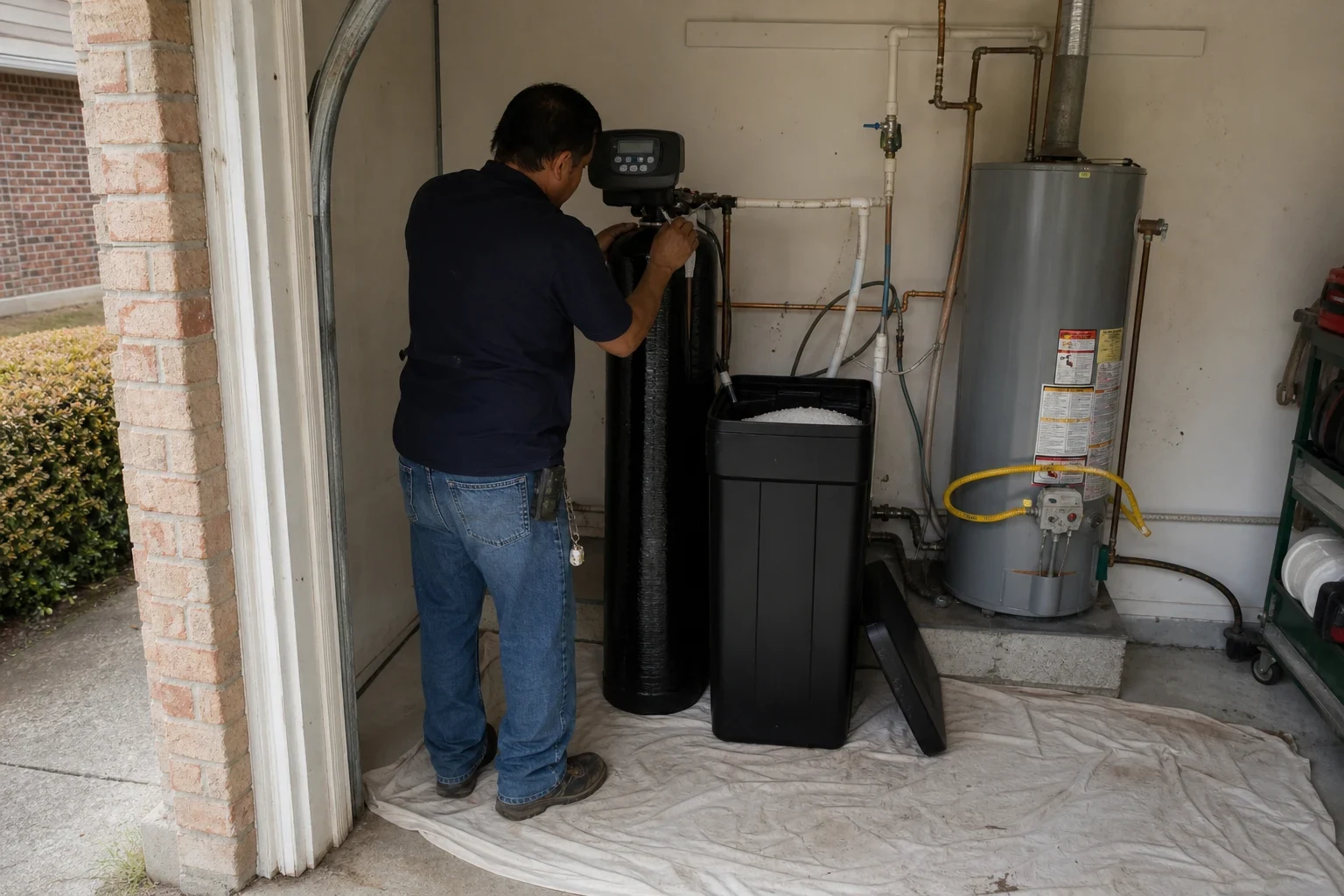
Water softeners
We measure your water's hardness before recommending a softener, then size the resin tank and valve to your household's actual use.
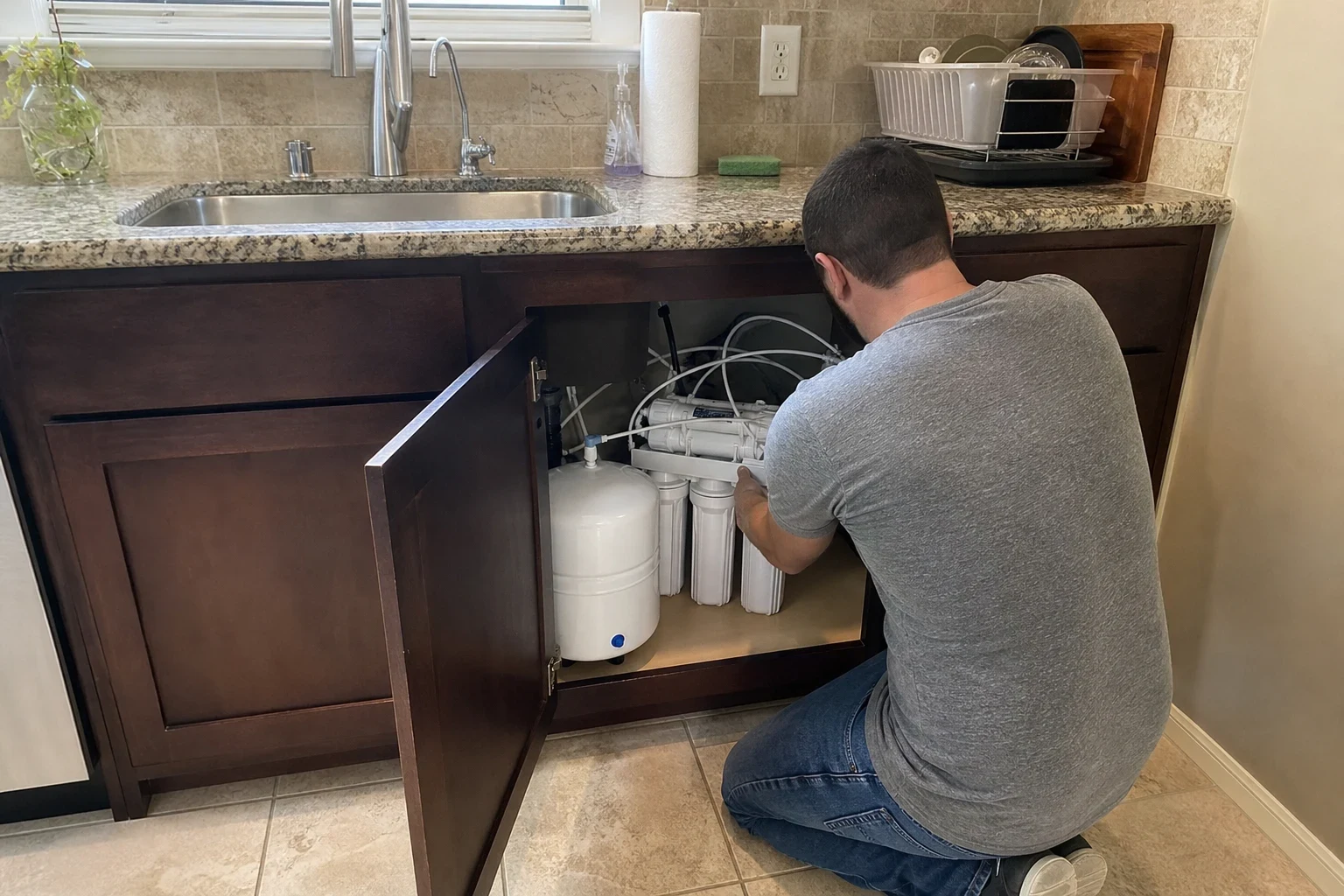
Under-sink reverse osmosis
A compact RO system under your kitchen sink that strips lead, dissolved solids and disinfectant taste from the water you drink and cook with.
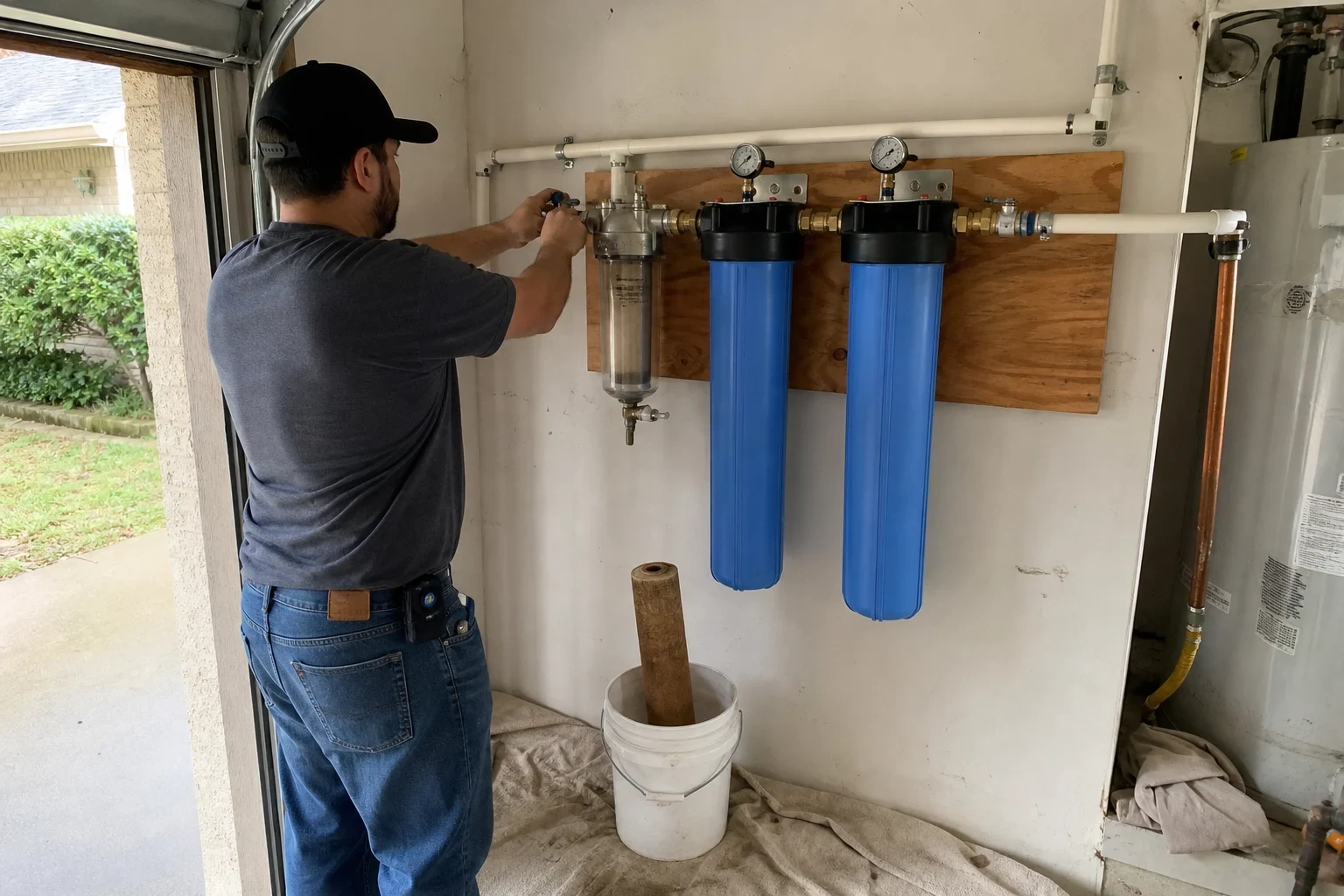
Iron and sediment filtration
We trace orange stains and gritty water to their source, then fit a spin-down screen, cartridge housing or backwashing iron filter sized to your plumbing.
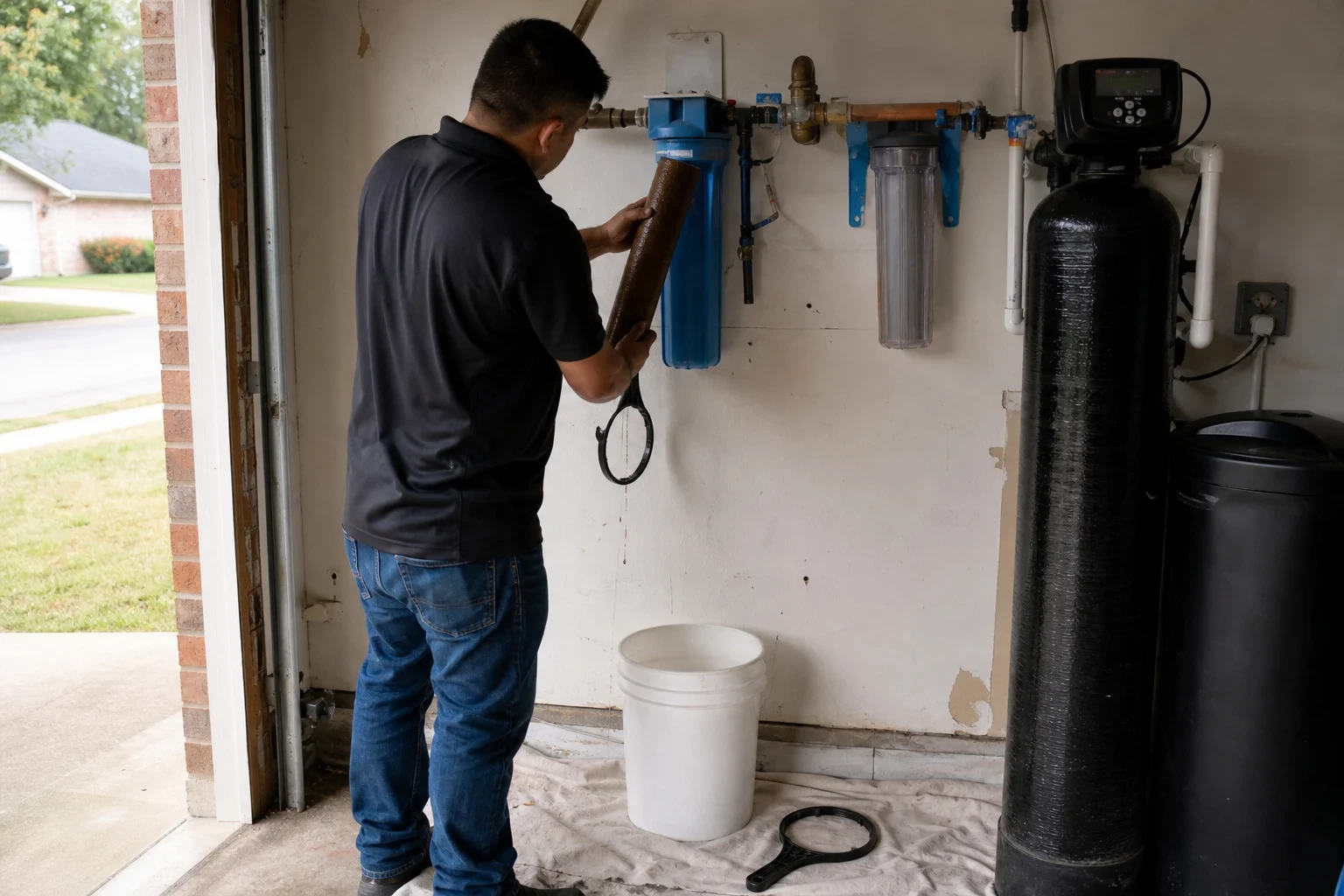
Filter replacement
We swap cartridges, RO membranes and worn O-rings on the systems already in your home, then check pressure and log the date so the next change is on time.
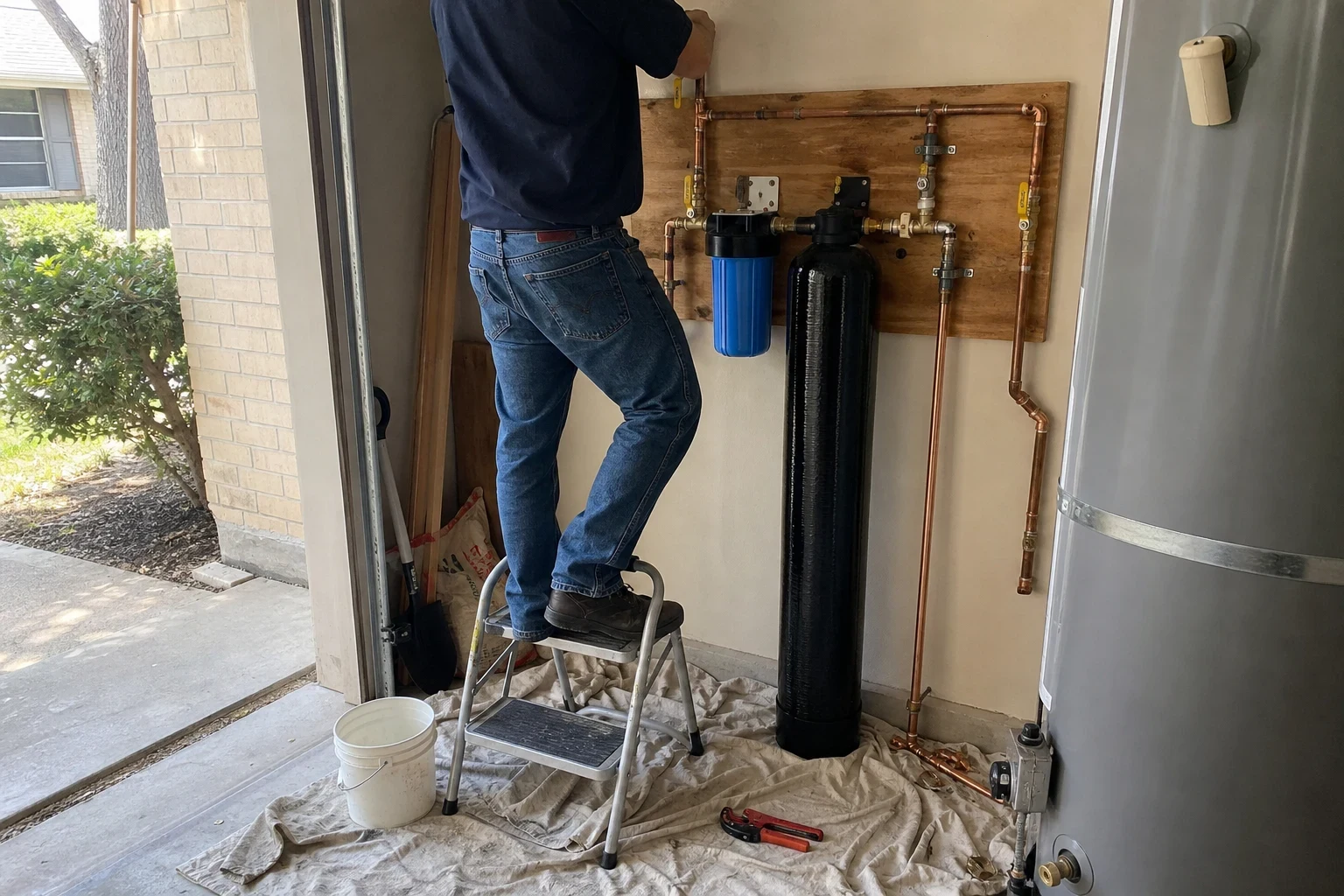
Whole-house carbon filtration
A carbon system on your main line that takes the disinfectant taste and smell out of showers, sinks and appliances, sized after we check your water and flow.
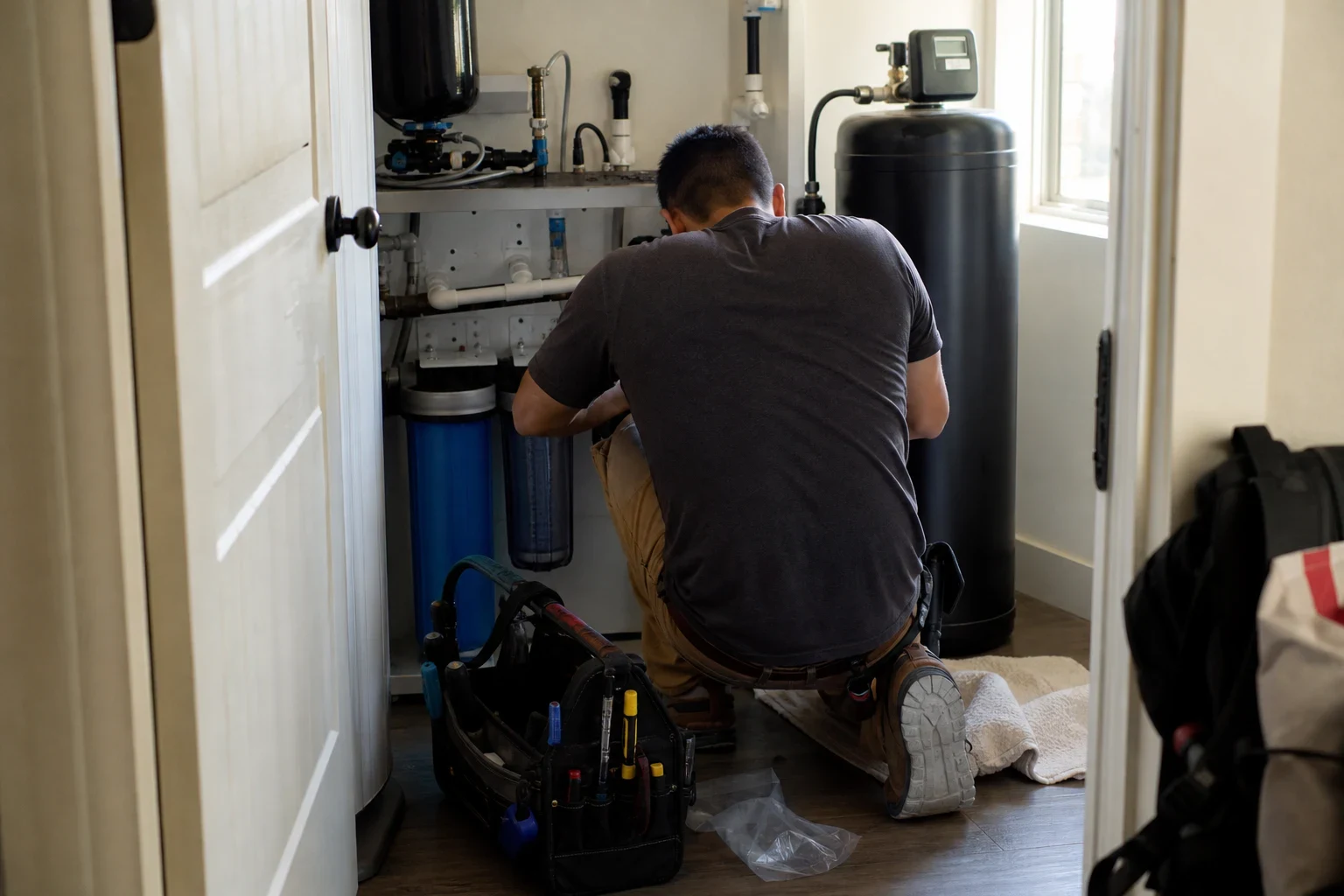
A Water Filtration Company That Measures Before It Sells
Too many homeowners end up with softeners and multi-stage systems their water never needed, and we set up this company to work the other way around. North Texas tap water is treated surface water, and the issues people notice usually come from the disinfectant, seasonal taste changes in the source lakes, or the plumbing inside the house. Those are specific problems with specific fixes.
We keep the work narrow on purpose: testing, carbon, reverse osmosis, sediment and iron filtration, softening when the numbers call for it, and maintenance afterward. That focus means we know how each piece behaves, how long the media lasts on local water, and what tends to fail first.
- In business
- 4
- Warranty
- Lifetime warranty on the majority of parts
- Certifications
- NSF certified
How a Job Runs, Start to Finish
Most installs take part of one day. Here is what happens from the first call.
- 1
The first call
You describe what is bothering you, such as a pool odor, white buildup on faucets, rust rings in the toilet, or just a wish for better drinking water. Then we book a time to test.
- 2
Testing at your faucet
We take samples at the kitchen and where water comes into the house, run tests on site, and ship samples to an independent lab when lead or rarer contaminants are in question.
- 3
Options and written estimate
We go over the results with you and lay out your choices, including leaving things alone if the water is already fine. A written estimate comes next.
- 4
Install
We turn off the water, add a bypass valve so the system can be cut off later, hook up the equipment, flush the new media and check each joint for leaks under pressure.
- 5
Retest and walkthrough
We test the filtered water so you can see the difference, show you how to use the bypass, and write down when cartridges or media are due.
Where We Work
We are based in Farmers Branch and install and service systems in homes throughout the surrounding area, including Carrollton, Addison, Irving, Coppell, Richardson and Plano. We also work in University Park, Highland Park, Lewisville and Euless. Each city supplies its own water and handles permits its own way, which is why we test in your kitchen rather than assume.
- Farmers Branch
- Carrollton
- Addison
- Irving
- Coppell
- University Park
- Highland Park
- Plano
- Lewisville
- Richardson
- Euless
Live a little outside this list? Mention your town on the phone, and we can tell you right then whether it falls within our route.
How We Work Inside Your Home
A filter that is wrong for your water wastes money and floor space. Our process is built so you only pay for equipment your test results support.
The test comes first
We measure hardness, chlorine or chloramine residual, total dissolved solids, iron and pH before recommending anything. You see the readings, and we explain what each one means for your fixtures and your drinking water.
The right carbon for the disinfectant
Standard activated carbon handles free chlorine well but does little against chloramine. If your water carries chloramine, we specify catalytic carbon and size the tank for your flow rate, so the taste fix actually lasts.
Installs planned around your plumbing
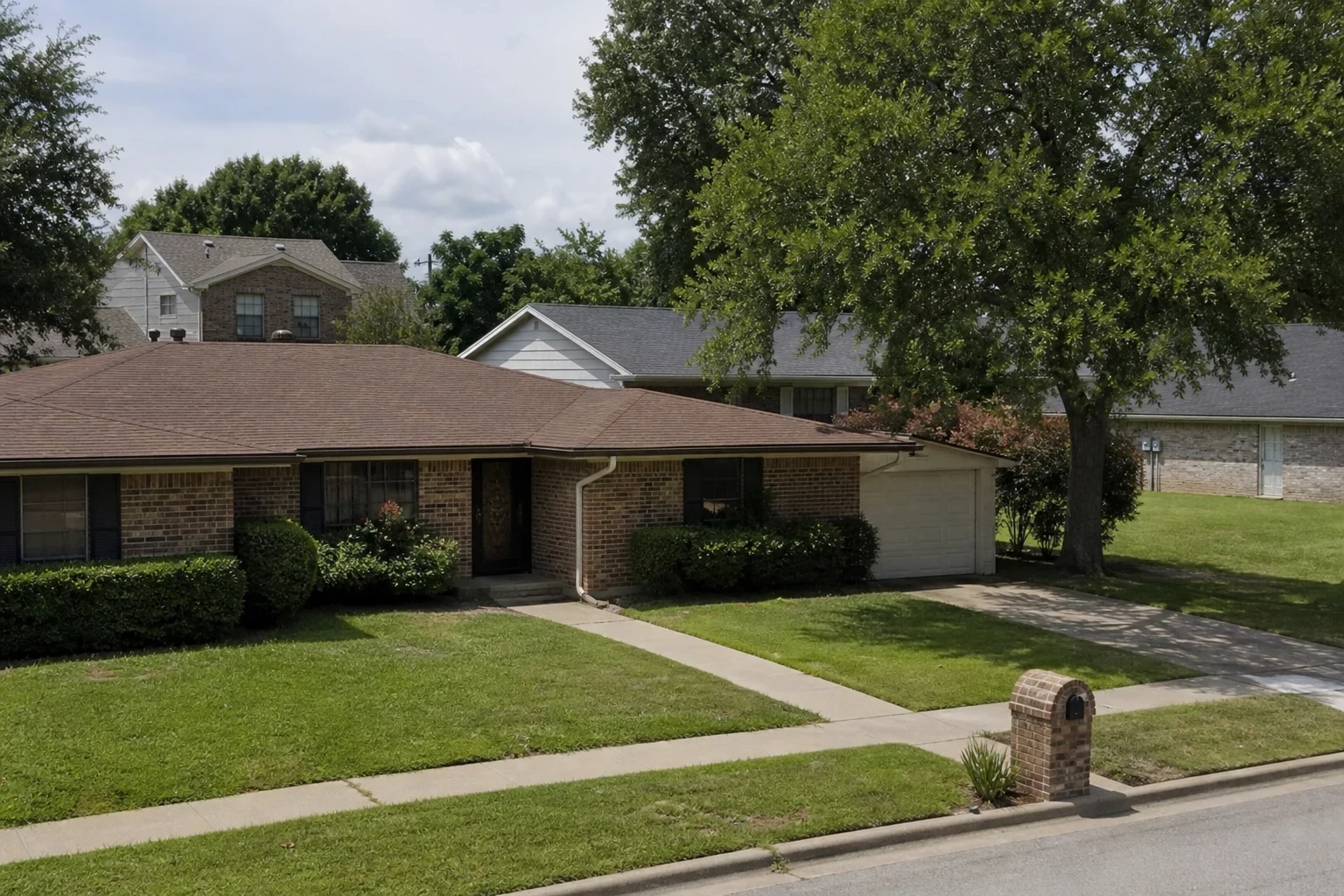
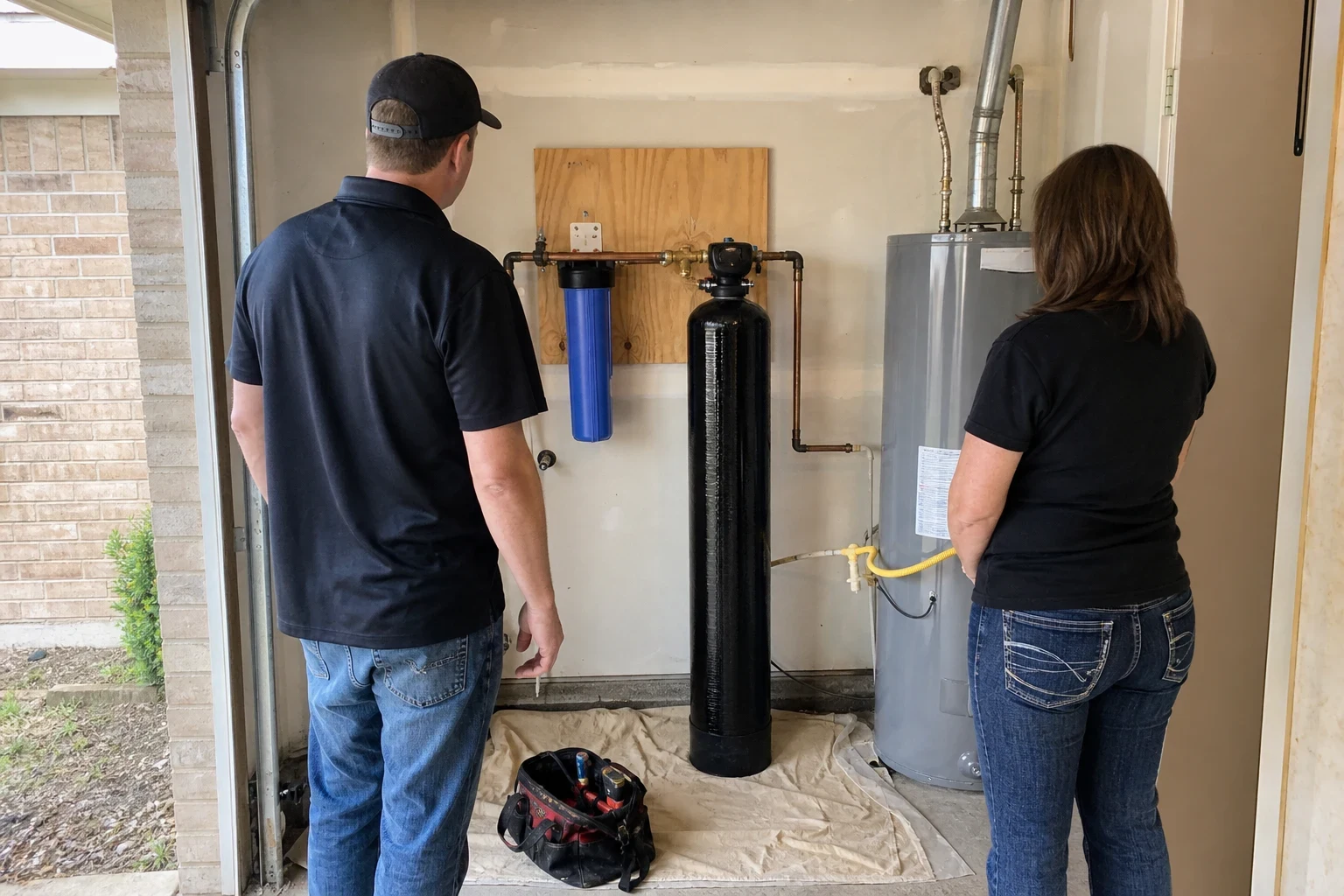
Many homes in the area are slab-on-grade with the main line entering at the garage or an exterior hose bib. We look at where the line comes in, whether there is room for a bypass valve, and where a drain and outlet sit before quoting a whole-house system or softener.
Line items you can read
Your estimate lists the equipment, the fittings, labor and any permit fee separately. If something changes once we open a wall or cut into a line, we stop and show you before going further.
We protect the work area
We lay drop cloths under sinks and in garages, cap open lines, and haul away packaging and old cartridges. Your kitchen goes back the way we found it, minus the old filter.
Family-owned and well reviewed
We are a family-owned, BBB accredited and NSF certified company with 4.9 stars from 325 Google reviews. Free installation comes with the equipment we recommend, and it is backed by a lifetime warranty on the majority of parts.
What Homeowners Want to Know
Is it safe to drink the tap water here?
Local city water is treated and checked against federal and state drinking water standards. Most callers are concerned about taste, smell or scale rather than safety. A test at your own faucet shows whether your home's plumbing changes anything.
Why does my faucet water smell like chemicals?
Utilities keep a leftover dose of disinfectant in the water so it stays clean on the long run through the mains to your house. Some use free chlorine; others use chloramine, a blend of chlorine and ammonia that lasts longer and is tougher to remove. Whole-house carbon filtration fixes the taste and smell, but chloramine needs catalytic carbon, so we confirm which disinfectant reaches your faucet before picking the media.
Should I get a water softener?
Only if your water calls for one. A softener pays off when hardness is high enough to leave scale on fixtures, spots on glasses and deposits in the water heater. We read hardness in grains per gallon at your home and suggest a softener only when that number backs it up.
Will a filter take out lead?
Lead typically gets into water from aging solder, brass fixtures or service lines rather than from the treatment plant. Under-sink reverse osmosis with a membrane rated for lead reduction cuts lead at the kitchen faucet. We recommend a lab test first to learn whether lead is there at all.
How often will I need to replace filters?
That varies with the system and your household's water use. Sediment prefilters often need replacing a few times each year, RO membranes go longer, and whole-house carbon media holds up for several years. We record your schedule at install, and our filter replacement and maintenance service can take it off your hands.
Does a whole-house system reduce water pressure?
Not when it is sized correctly. Pressure loss after an install usually comes from a tank or cartridge too small for your home's flow, or a cartridge left clogged long past its change date. We size equipment to gallons per minute to prevent that.
Will I need a permit for the install?
Usually not for an under-sink unit. Connecting a whole-house system or softener to the main line may need one, depending on your city. If it does, we pull the permit and set up any inspection.
Learn What Is Really Coming Out of Your Tap
Testing settles the question before you put money into equipment. We share the results and give you an honest recommendation, even when that means changing nothing.