ServicesWhole-house carbon filtration
Whole-House Carbon Filtration in Farmers Branch
We install a carbon filter where the water line enters your home, so every faucet, shower and appliance gets water without the chlorine taste and smell. We check your water first, size the system to your flow, and explain what it removes and what it leaves alone.
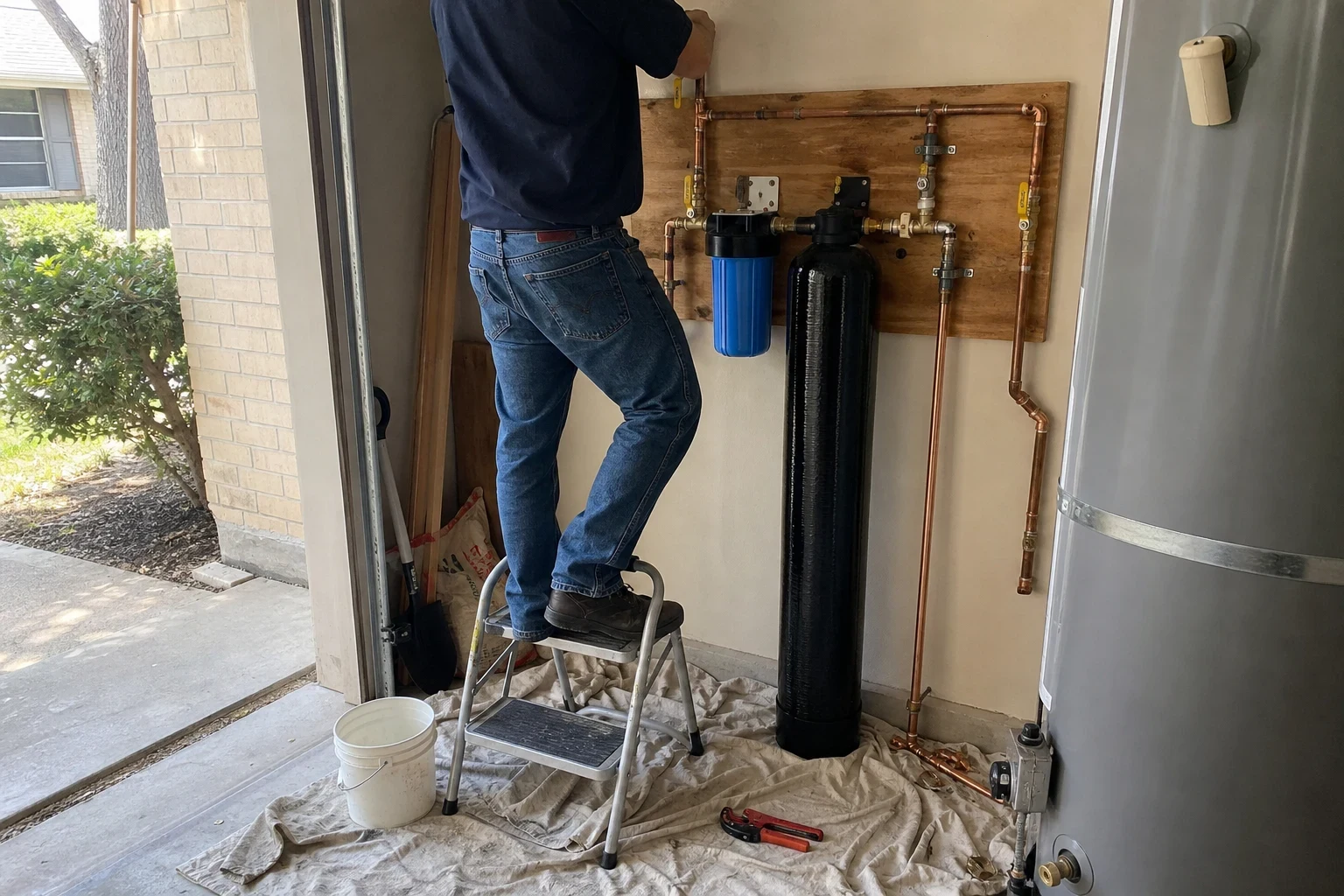
How Carbon Clears the Disinfectant Taste
Your utility leaves a measured amount of disinfectant in the water so it stays safe through miles of pipe. That residual is useful out in the street and unwelcome in your shower, where hot water carries it into the air, and in your morning coffee. Activated carbon pulls it out by adsorption: as water moves through the bed, the disinfectant and many organic compounds cling to the huge pore surface inside each granule.
The type of disinfectant matters. Some systems dose free chlorine, while others use chloramine, a compound of chlorine and ammonia that ordinary carbon breaks down only slowly. For chloramine we use catalytic carbon, which is treated so its surface reacts with the compound much faster. Getting that choice right is the difference between a system that performs for years and one that fades in months.
Carbon is not a softener and it is not a fix for lead from old plumbing. If hardness or lead is the real concern, we will say so and point you to water testing, a softener after a hardness test, or under-sink reverse osmosis instead.
What Comes With the Install
- Checking your water and plumbing first
- We test disinfectant level and hardness, read your static pressure and find where the main comes into the house. Those results decide the media and the tank size.
- Carbon matched to your supply
- When your water carries free chlorine, regular granular activated carbon handles it. When the test finds chloramine, we use catalytic media instead, and the estimate states which media and why.
- Prefilter for sediment
- A sediment cartridge in front of the carbon traps grit and pipe scale before it can coat the carbon and cut its life short. If you are also seeing rust or particles, we may recommend iron and sediment filtration as its own stage.
- Shutoffs and a bypass valve
- Each system includes a bypass so the house keeps water during service, along with shutoffs on either side for tidy cartridge or media changes.
- A permit if the job needs one
- Connecting to the main counts as plumbing work. If your city requires a permit and inspection, we pull the permit and book the inspection.
- Cleanup and walkthrough
- We run water through the carbon until it comes out clear, tidy the work area, and walk you through the bypass and the service schedule.
Signs Whole-House Carbon Is the Right Call
The shower smells like a pool
Hot water releases disinfectant into the air, so the smell is strongest in the bathroom. An under-sink filter cannot help there; a whole-house system can.
Coffee and tea taste flat or sharp
Chlorine reacts with the oils in coffee and tea. If filtered pitcher water tastes better, the disinfectant is likely the cause.
Your fridge filter wears out fast
Small refrigerator cartridges hold very little carbon. Removing the disinfectant upstream lets them last longer.
Earthy taste in the hot months
Surface-water supplies around North Texas can pick up an earthy or musty taste in summer. Carbon adsorbs many of the compounds behind it.
You want one fix, not several
If you are filtering at the kitchen, the shower heads and the fridge separately, one system on the main is usually simpler to maintain.
What Moves the Price
The price depends mostly on how much carbon your home needs and how hard the main is to reach. We quote after seeing both, and the estimate lists each part so nothing appears later.
Cartridge or tank system
Big cartridge housings cost less up front but need more frequent changes. A tank of loose carbon costs more initially and runs much longer between media changes.
Standard or catalytic carbon
Catalytic carbon costs more per cubic foot. If your water uses chloramine, it is the part that makes the system worth installing.
Flow and household size
More bathrooms and higher peak flow need more carbon so water spends enough time in contact with it. Undersizing saves money and loses performance.
Plumbing access and line size
A main in an open garage is straightforward. A line in a tight closet, a larger pipe size, or old galvanized fittings that need replacing adds labor and parts.
Permit and extra stages
Permit fees, a sediment prefilter, or a separate iron stage add to the total when your water and local rules call for them.
How the Job Runs
- 1
Phone conversation
You tell us what you notice and where. We ask about your home's age, the number of bathrooms and where the main shutoff sits.
- 2
On-site check and written estimate
We test the water, measure pressure and look at the routing options. You get a line-item estimate covering the system, media, plumbing parts and any permit.
- 3
Install day
We shut off the water, cut into the main near where it enters, and mount the prefilter, carbon unit and bypass. On many slab homes the line comes up in the garage or along an exterior wall, which keeps the work out of your living space. Most homes are without water for a few hours.
- 4
Flush, check and walkthrough
We flush the media, check for leaks and pressure drop, and confirm the disinfectant reading downstream is near zero. Then we show you the bypass and write down when the prefilter and carbon are due.
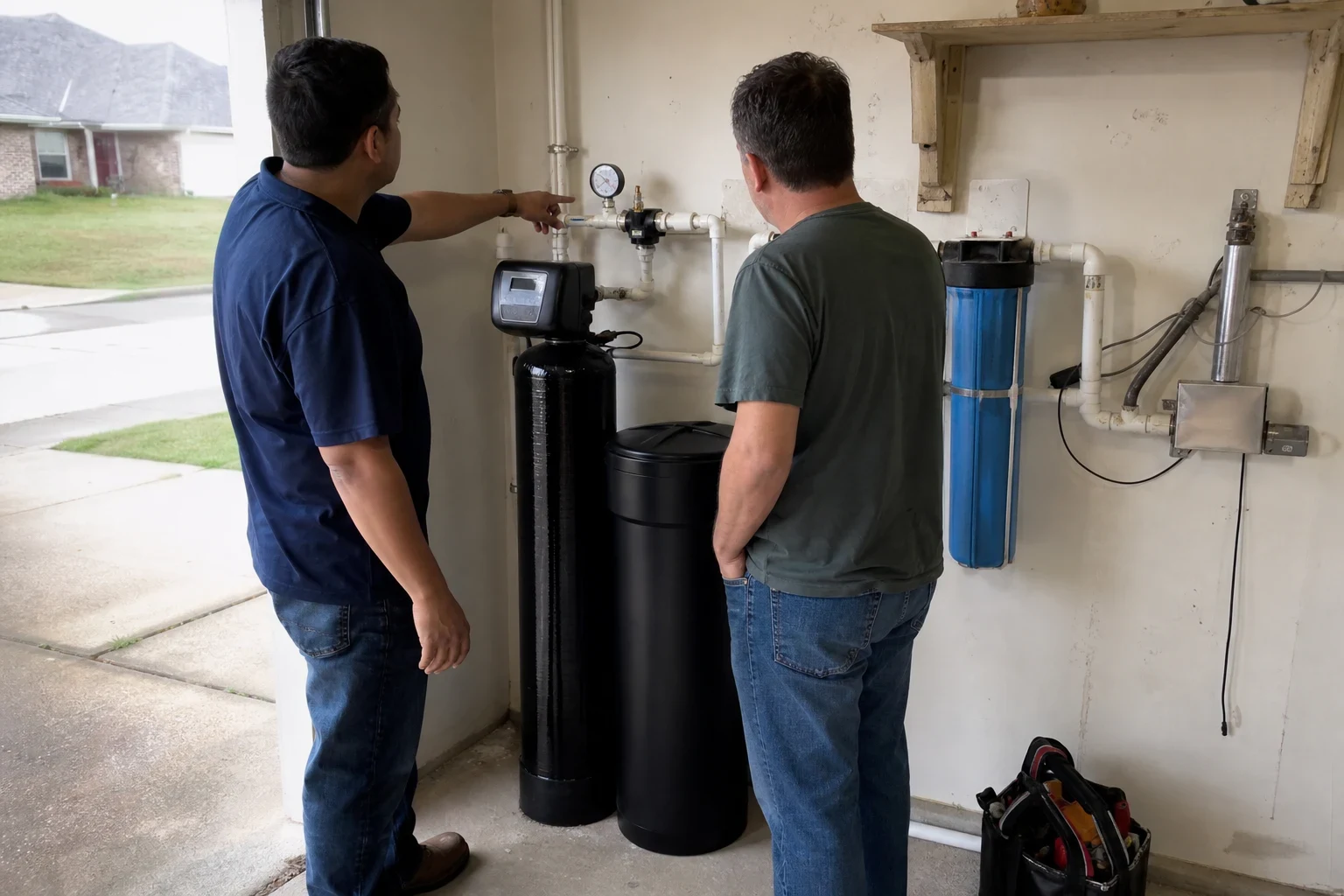
Whole-House Carbon Questions
Will a carbon filter lower my water pressure?
A properly sized system causes only a small drop. Pressure loss comes from undersized housings or a clogged prefilter. We measure pressure before and after install so you can see the difference yourself.
Does it remove lead?
Whole-house carbon is not the right tool for lead. Lead usually comes from older solder and fixtures inside the home, after the main, so a filter at the main cannot catch it. For drinking and cooking water, under-sink reverse osmosis is the better choice, ideally after water testing confirms the issue.
Will it soften my water?
No. Carbon does not remove calcium or magnesium. If you see scale on fixtures, we test hardness first and only recommend a softener if the numbers support one.
How often does the carbon need changing?
It depends on carbon volume, your disinfectant and how much water you use. Cartridge systems need changes far more often than tank systems, and the sediment prefilter is the most frequent part. Our filter replacement and maintenance service handles both on a schedule set at install.
Should I drink water straight from a whole-house system?
Yes, it is still treated city water with the disinfectant taste removed. Because the residual disinfectant is gone after the filter, we suggest not letting water sit unused in long runs for weeks, and keeping up with the media changes.
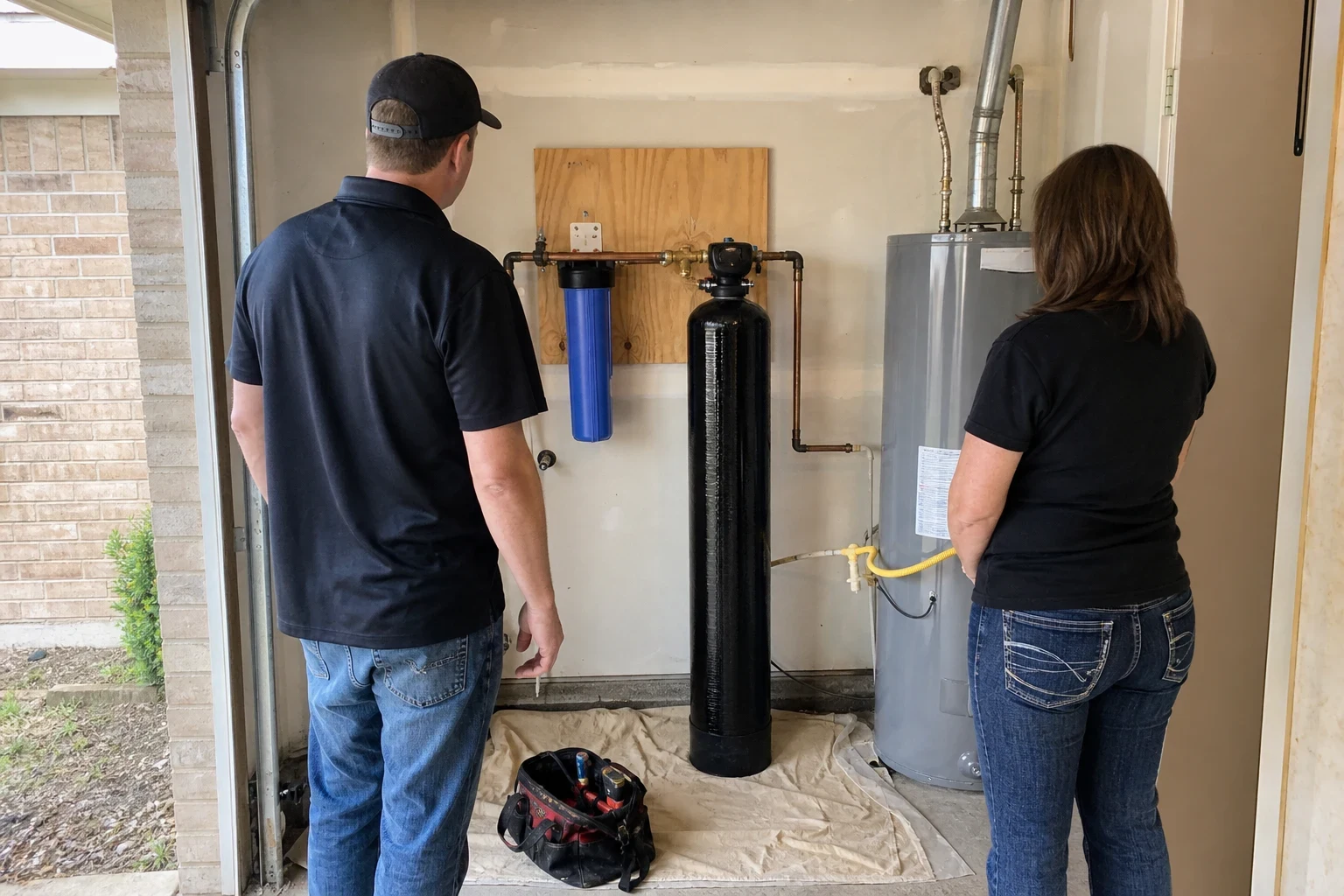
Find Out What Size System Your Home Needs
Tell us what you taste and smell, and we will explain the media, the tank size and the plumbing involved before any work starts.