ServicesWater softeners
Water Softeners in Farmers Branch, Sized From Your Hardness Test
A softener only earns its place if your water is hard enough to cause scale. We test your tap water first, show you the grains-per-gallon number, and recommend a softener only when the result supports one. If it does, we size it to your home and install it cleanly.
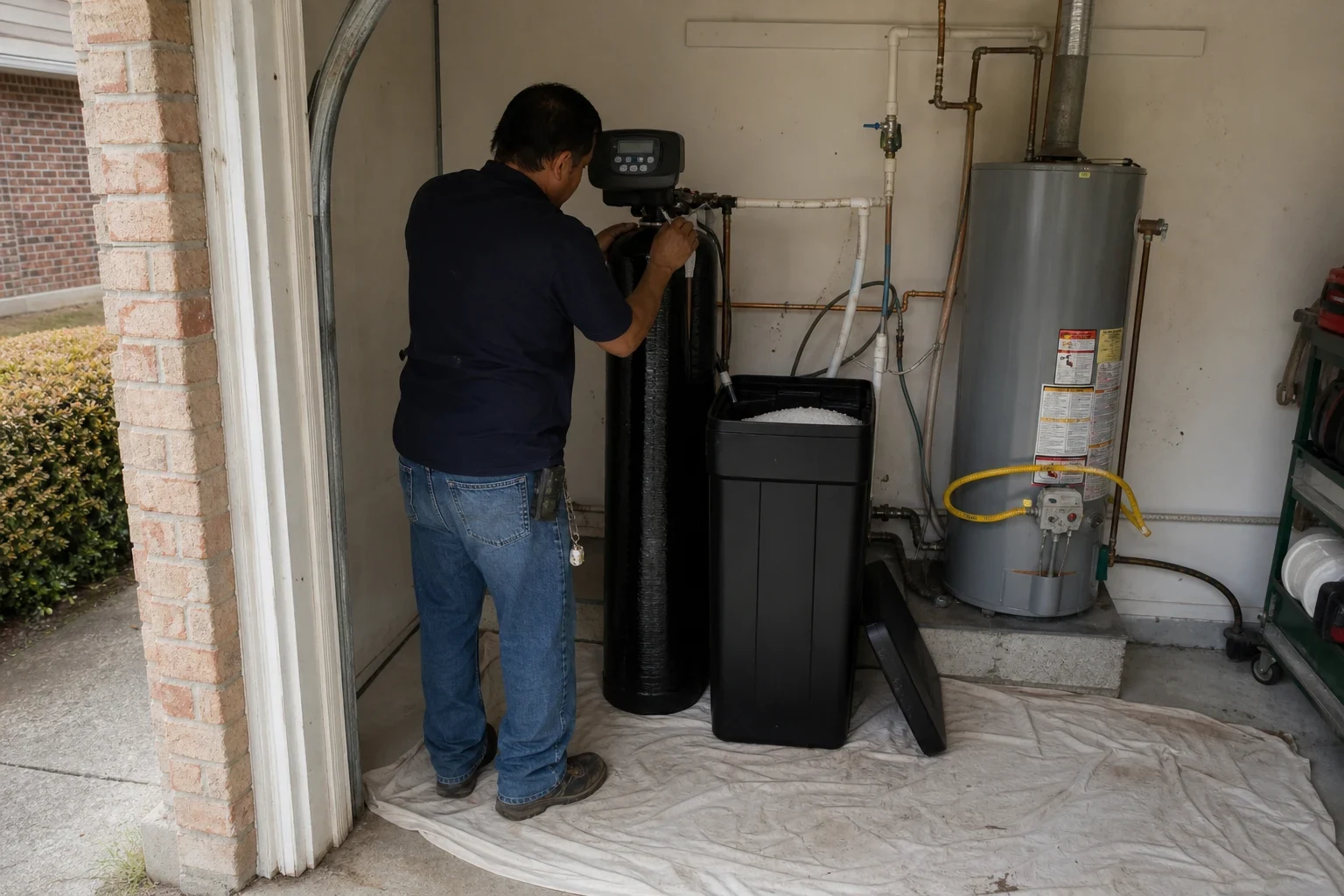
Why a hardness test comes before any softener
Softeners work by ion exchange. Hard water flows through a tank of resin beads that swap sodium or potassium for calcium and magnesium, the minerals responsible for scale on fixtures and inside water heaters. Once the resin is loaded, the control valve starts a regeneration cycle, rinsing the beads with brine from the salt tank and sending the used solution down a drain.
Every week, that cycle uses salt, water and a drain hookup. With water that is only a little hard, you take on those costs and get little back. That is why we begin with a hardness test in your home and give you the result in grains per gallon. Sometimes a carbon filter, or no equipment at all, is the smarter choice, and we will say so.
If the reading does support a softener, we pick its capacity based on your hardness, any iron in the water and the number of people in the house. Sized that way, it regenerates on time rather than running short or burning through salt.
What comes with a softener install
Hardness and iron testing on site
Before we quote anything, we measure total hardness and test for iron. More than a modest amount of iron can foul softener resin, which changes the system we suggest.
Sizing by grains
We multiply your hardness reading by your daily water use to find how many grains the resin must handle between regenerations. A properly sized tank regenerates every several days instead of nightly.
Control valve with a meter
We prefer demand-initiated valves that track the gallons you actually use. A basic timer regenerates on a set schedule no matter how much water went through.
Main line connection with bypass
We install the softener on the main line, typically beside the water heater in the garage of the slab homes found throughout Farmers Branch. A bypass valve lets you take it offline for service while the rest of the house keeps water.
Air-gapped drain line
Regeneration water runs to a drain through a proper air gap, so it cannot siphon back into your supply. When the city requires a plumbing permit for the job, we pull it.
Setup and how-to
We add salt, enter your hardness and household size into the valve, run a trial regeneration and show you how to check the brine tank.
Signs your home may need a softener
White crust on fixtures
Chalky buildup on faucet aerators, showerheads and glass doors is calcium carbonate left behind as water evaporates.
A water heater that pops or rumbles
Scale settles on the bottom of a tank water heater and traps water beneath it. The noise is steam bursting through, and it means the burner is working harder to heat through mineral.
Soap that will not lather
Calcium and magnesium bind with soap and form curd instead of suds. You use more shampoo and detergent, and laundry comes out stiff.
Spotty dishes after a full cycle
Cloudy film on glassware that rinse aid does not fix often points to hardness.
A test result above a few grains
Any reading is more reliable than symptoms. If you have not tested, our water testing service is the place to start.
How the job runs
- 1
Test and talk it through
We test a tap sample, write down the hardness and iron readings and explain what they mean for your plumbing. If a softener is not worth it, the visit ends there.
- 2
Written sizing and estimate
If one makes sense, you get the recommended capacity, valve type and every line item in writing before any work is scheduled.
- 3
Installation day
We shut off the main, cut in the bypass and softener, run the drain line with an air gap and protect the floor where we work. Most installs are finished within a single visit.
- 4
Programming and cleanup
We program the valve, run a regeneration, retest softened water at a tap and haul away packaging and cut pipe.
What moves the price of a softener
No two installs cost the same, because the right softener depends on your water and your plumbing. We give you a written estimate after the hardness test, with each part and labor item listed. These are the things that move the number most.
- Resin capacity
- Harder water and larger households need more grains of capacity, which means a bigger resin tank and more salt per cycle.
- Iron in the water
- Measurable iron may call for an iron-tolerant resin or a separate prefilter from our iron and sediment filtration service.
- Location and pipe material
- A garage water heater with copper or PEX close by is a short tie-in. Running new line or working around a tight closet adds time.
- Drain access
- The softener needs a nearby drain that will take regeneration water. If there is none, we have to run a longer line.
- Permit requirements
- Where a plumbing permit and inspection apply, the fee and inspection visit are part of the job.
Water softener questions
Something not covered here? (972) 687-7743
Is water hard enough here to need a softener?
It depends on your home's supply and plumbing, which is why we test instead of assuming. Under roughly three grains per gallon, a softener usually is not worth the salt and water. Higher than that, scale builds faster and a softener starts to pay off.
Will softened water taste salty?
The amount of sodium added depends on your hardness, and at moderate hardness it is small. If you want less, potassium chloride works in most softeners instead of sodium chloride. Many people also add under-sink reverse osmosis at the kitchen sink for drinking water.
Does a softener remove chlorine or improve taste?
No. Ion exchange targets calcium and magnesium only. If chlorine taste or odor bothers you, whole-house carbon filtration is the right tool, and it can be installed ahead of a softener.
How much maintenance does a softener need?
You add salt when the level drops, roughly monthly for most households, and break up any salt bridge that forms. We can also clean the brine tank and check the valve as part of filter replacement and maintenance.
Can the drain water go into the yard?
We route regeneration water to a proper drain with an air gap. Discharging brine into soil or landscaping can damage plants, and drain rules vary by city.
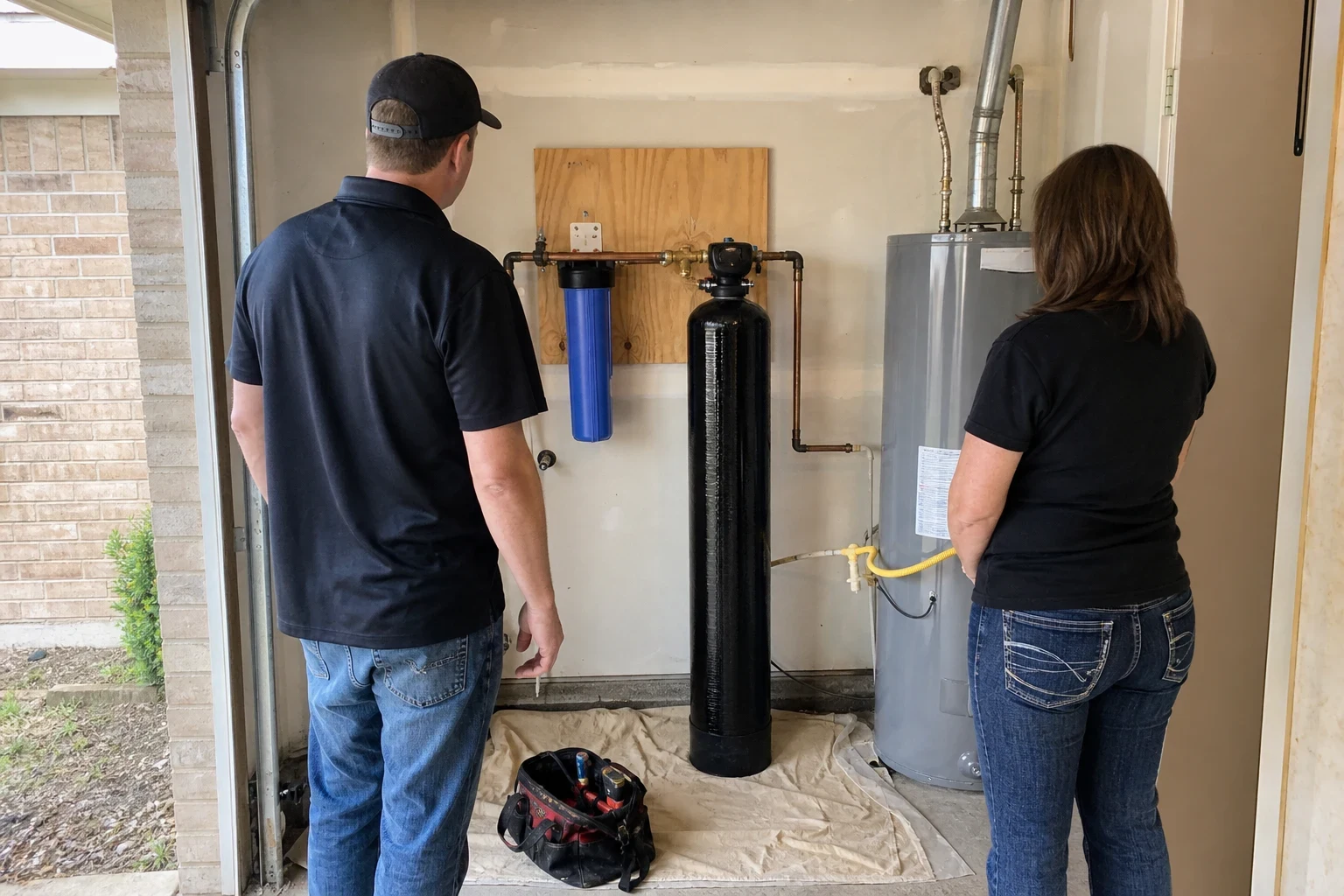
Find out what your hardness number really is
We will test your water, tell you plainly whether a softener makes sense and size it to your home if it does.