ServicesFilter replacement
Filter Replacement and Maintenance in Farmers Branch
Cartridges stop working quietly, long before the water looks wrong. We change sediment, carbon and reverse osmosis cartridges, inspect housings and O-rings, and set a change schedule built on how much water your home really uses.
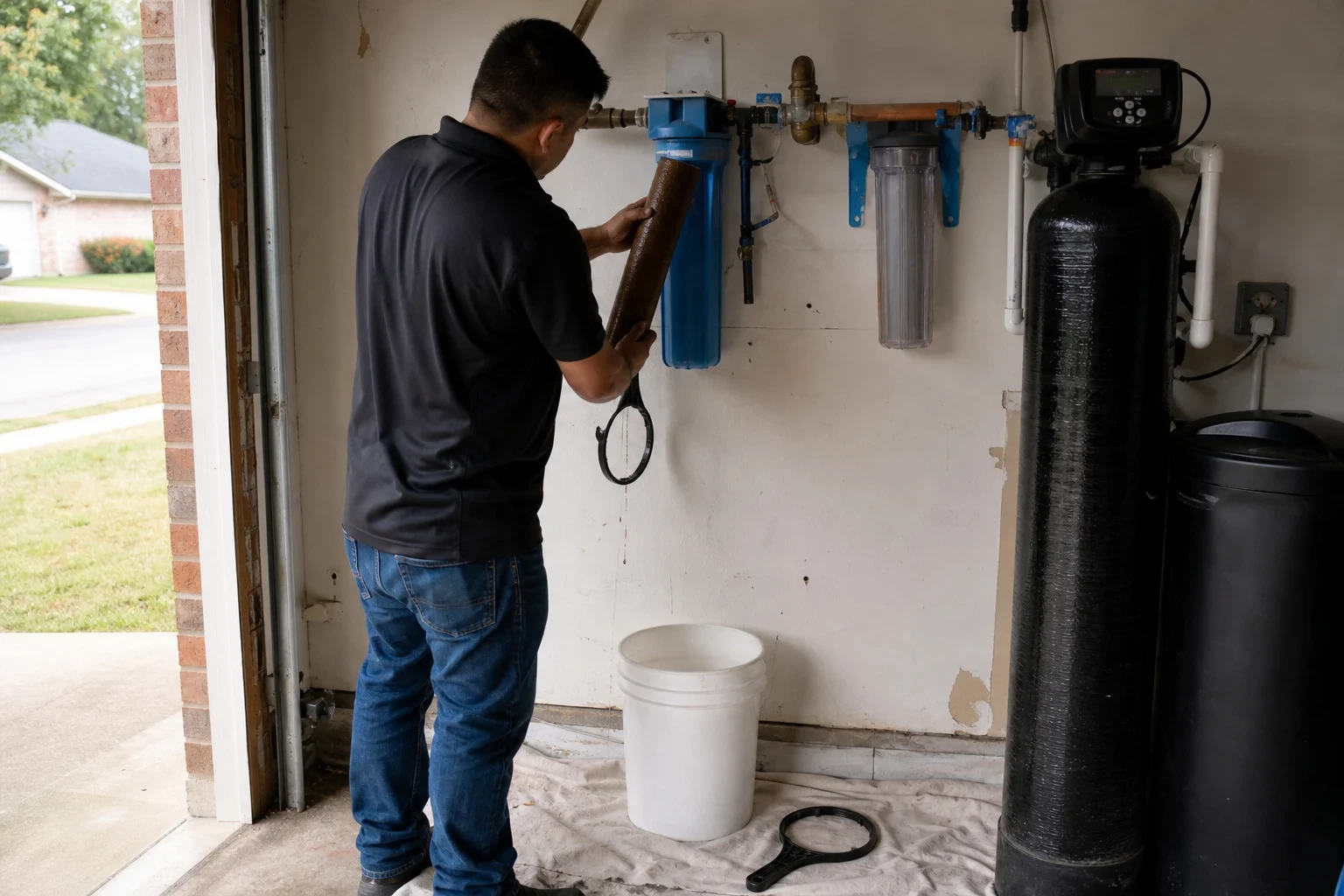
What a filter change actually fixes
Every cartridge in your home has a finite life. A spun polypropylene sediment filter slowly packs with particles until it restricts flow. A carbon block runs out of adsorption sites, and chlorine or chloramine taste comes back through it. An RO membrane fouls and starts passing more dissolved solids into your drinking water. None of this is visible from the faucet until it is well past due.
Our maintenance visits cover the whole system, not just the cartridge. We look at sump housings for hairline cracks, replace flattened O-rings, check the pressure on both sides of the filter and confirm the bypass valve still seals. Many homes in the area have their equipment in an attached garage, where North Texas summer heat ages plastic housings and rubber seals faster than the cartridge schedule suggests, so those parts get a close look.
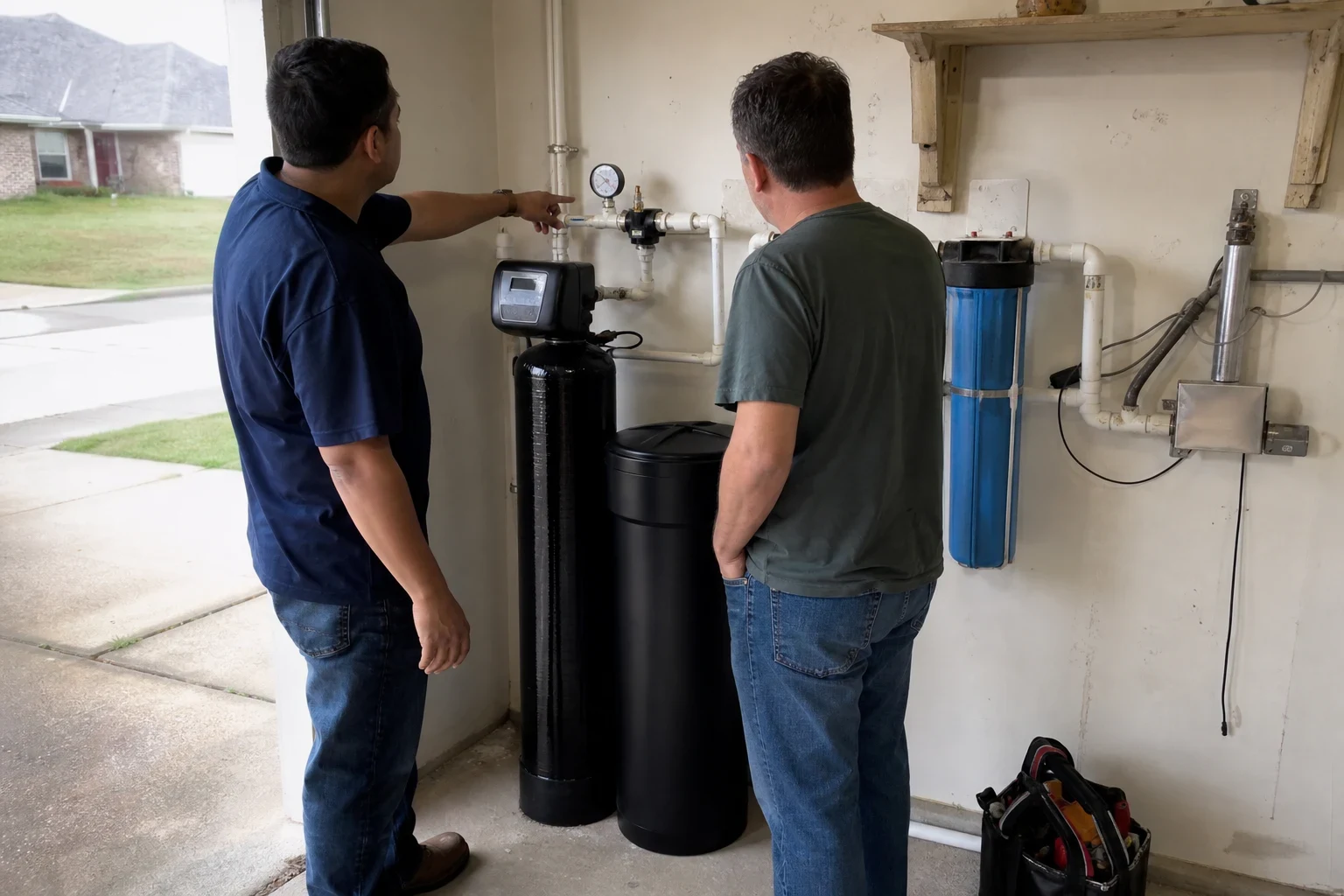
What's included in a maintenance visit
- 01
Cartridge replacement
We fit the correct sediment, carbon block or GAC cartridge for your housing size, whether it is a standard 2.5 by 10 inch or a 4.5 by 20 inch whole-house unit. Micron rating and media type are matched to the job the stage is doing.
- 02
RO membrane and post-filter service
On under-sink reverse osmosis systems we change the pre-filters, the polishing carbon and, when its readings call for it, the thin-film membrane. We also check the storage tank's air charge, since a low charge is a common cause of a slow, weak faucet.
- 03
Seals and housings
O-rings are cleaned, inspected and lightly coated with food-grade silicone grease, or replaced if they are flattened or nicked. Sumps are washed out and checked for stress cracks near the threads.
- 04
Softener check
If your home has a softener, we look for salt bridging in the brine tank, confirm the regeneration settings and check the injector screen for debris.
- 05
Pressure and leak test
After restart we flush each new cartridge, purge trapped air and watch every fitting under full line pressure before we leave.
- 06
A dated record
We label each housing with the change date and tell you which stage will need attention first next time.
Questions about Filter replacement?
Call(972) 687-7743Signs your filters are overdue
Pressure has dropped
A clogged sediment cartridge restricts flow at every tap after it. If showers feel weaker than they used to, the filter is often the first thing to check.
The chlorine taste is back
Once a carbon filter's capacity is used up, treatment chemicals pass straight through. The water may still look clear.
The RO faucet is slow
A trickle at the drinking faucet usually points to fouled pre-filters, a tired membrane or a storage tank that has lost its air charge.
Brown or gray cartridge
Discoloration through a clear sump means the sediment stage is loaded. Heavy buildup soon after a change can also point to a problem upstream.
Drips at the housing
Moisture at the cap or threads usually means a dried-out O-ring or a cracked sump. Both get worse under pressure, not better.
How the visit runs
- 1
Shut off and relieve pressure
We close the inlet valve or set the bypass, then press the pressure-release button so the housing opens without spraying water.
- 2
Remove, clean and inspect
Old cartridges come out and the sumps are washed. We check threads, seals and fittings, and note anything that needs replacing beyond the cartridge.
- 3
Fit new parts
New cartridges and any worn O-rings go in and seals are greased. Housings are snugged by hand and given a light final turn with the housing wrench, never overtightened, since that is what cracks sumps.
- 4
Flush and test
Each carbon stage is flushed to clear loose fines. We bring the system back to pressure, check for leaks and confirm flow at the taps.
- 5
Set the next date
You get a plain explanation of what we found and a change interval based on your household's water use, not a generic sticker.
What moves the cost
Price depends mostly on how many stages your system has and which cartridges it takes. We tell you the parts and labor involved over the phone, before the visit, so the number is not a surprise. If we find a cracked housing or failed valve, we explain it and ask before doing extra work.
- Number of stages
- A single whole-house sediment filter is a short job. A five-stage RO system with membrane change takes more parts and more time.
- Cartridge type and size
- Large-format carbon block cartridges cost more than standard spun sediment filters. Specialty media for iron or catalytic carbon also changes the parts cost.
- Age of the system
- Older or discontinued units may need cross-reference cartridges or new housings when the original parts are no longer made.
- Condition of seals and housings
- Worn O-rings are inexpensive, while a cracked sump or leaking bypass valve adds parts and labor.
Questions about filter upkeep
How often do my filters need replacing?
Sediment filters typically last three to six months and carbon cartridges six to twelve, though your water use and incoming water decide the real number. RO membranes generally outlast the pre-filters in front of them. We set your intervals from your household's use and what the spent cartridges look like.
Do you work on systems someone else installed?
We do. Most systems use common housing sizes, so we can usually match cartridges by size and thread. If yours needs a proprietary cartridge, we let you know whether it can still be bought.
Why not swap the cartridges on my own?
Plenty of homeowners do, and that works. The trouble comes from a pinched O-ring, a sump turned too tight or a carbon flush that got skipped. A professional visit now and then spots seal and housing wear that a fast swap overlooks.
Should my softener be serviced as well?
Yes. Salt can form a hard bridge over the brine, the injector screen can plug up, and settings can shift after a power outage. A checkup keeps it regenerating properly so it does not waste salt or water.
What if the taste is still off after a new filter?
That means the cartridge was only part of the issue. We may recommend water testing to learn what is really in the water before suggesting different media or an added stage.
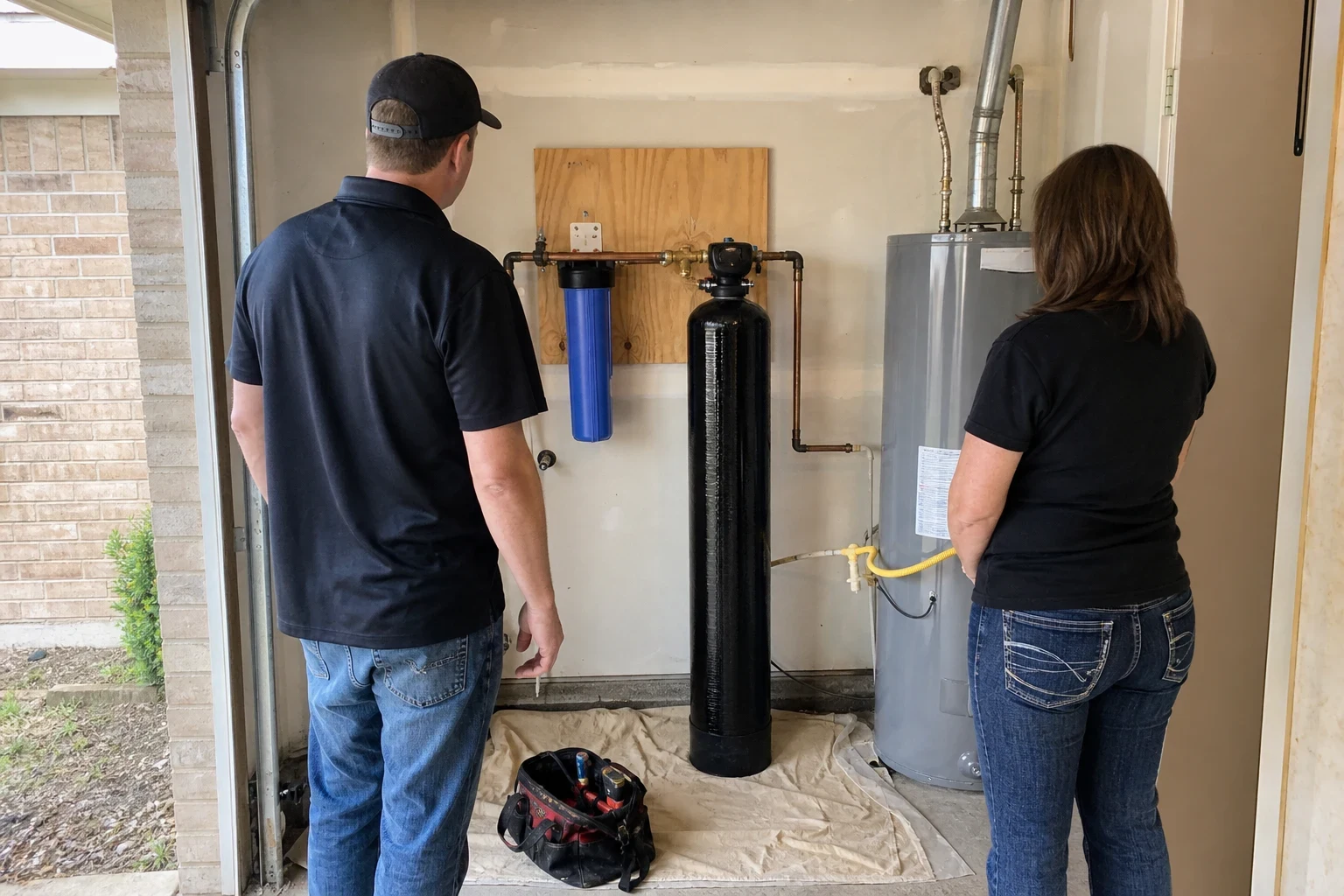
Find out what your system needs next
Give us the make of your system, or just describe it, and roughly when the cartridges were last swapped. We'll walk through what's due and book a visit that fits your week.