ServicesWater testing
Water Testing in Farmers Branch
We test the water coming out of your taps for hardness, chlorine or chloramine, iron, pH, dissolved solids and, where plumbing age calls for it, lead and copper. You get the numbers in writing and a straight answer on whether any treatment makes sense.
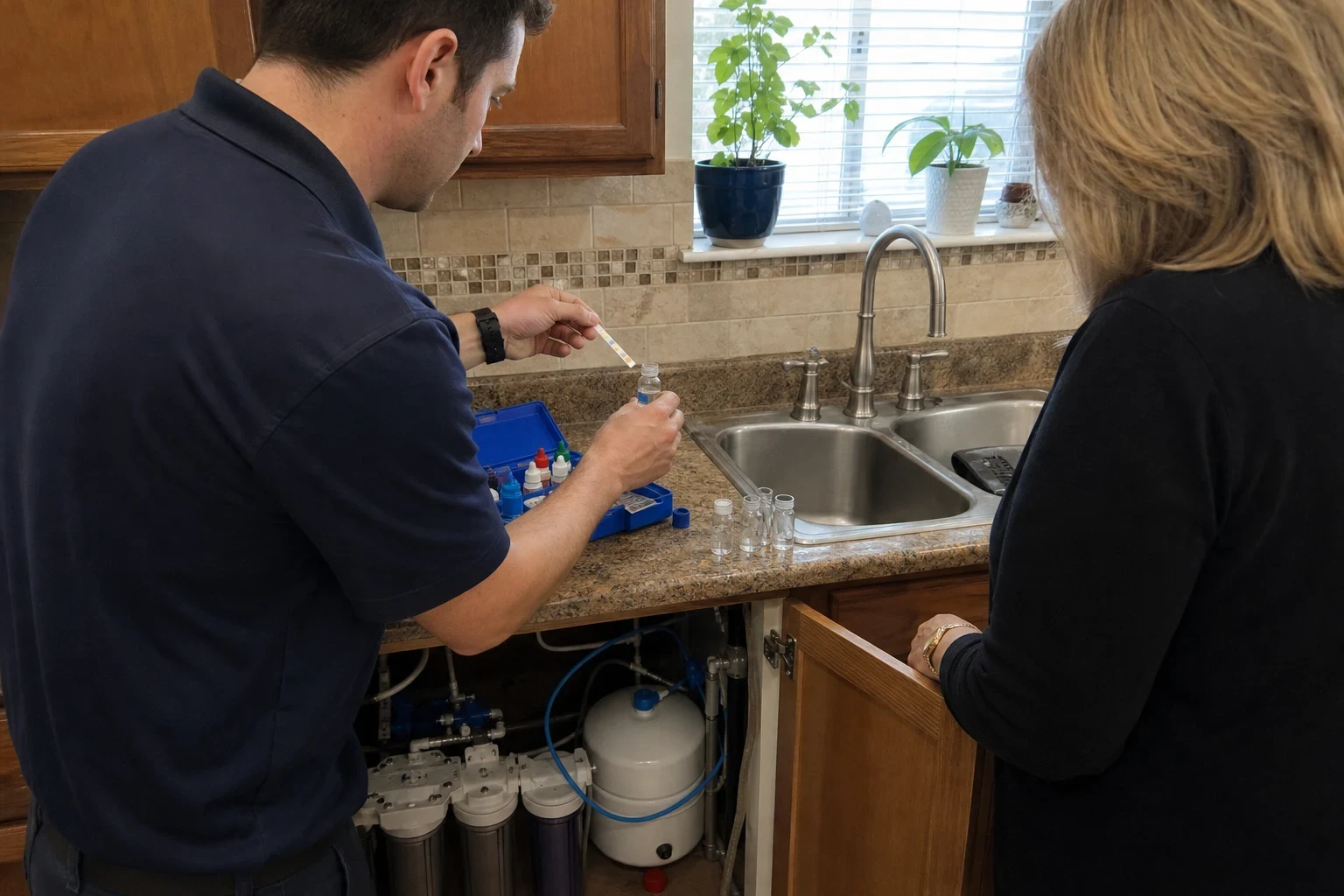
Test first, then decide on equipment
Most filtration decisions get made backward. Someone sells a softener or a whole-house system, and nobody ever measures the water it is supposed to fix. We start with the measurement. A test tells you what is actually in the water at your faucet, which can differ from the utility's report because the water has passed through your service line and your home's own pipes.
Treated city water across the Dallas area generally meets federal standards when it leaves the plant. What changes at the tap is usually caused by the house: old galvanized steel lines shedding rust, brass fixtures leaching metals, a water heater full of sediment. Testing separates a utility issue from a plumbing issue, and that difference decides whether you need a filter, a plumber or nothing at all.
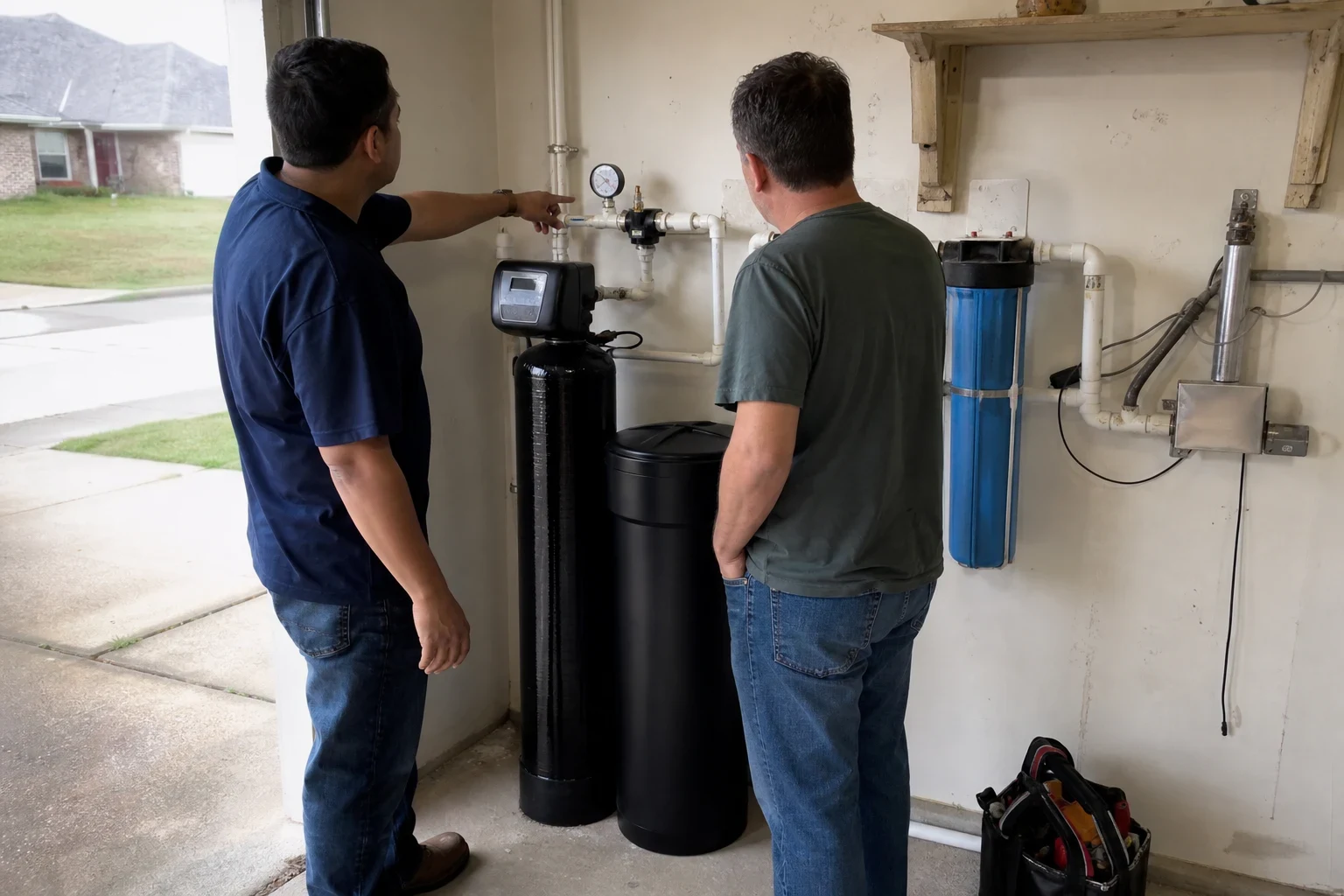
What a water test from us covers
- 01
Hardness in grains per gallon
We measure calcium and magnesium as grains per gallon. That single number decides whether a softener is worth discussing. Below a few grains, it usually is not.
- 02
Total and free chlorine
Comparing total chlorine to free chlorine shows whether your water is disinfected with chlorine or chloramine. That matters because chloramine needs catalytic carbon to remove, and standard carbon handles it poorly.
- 03
Iron, pH and dissolved solids
Iron above trace levels explains orange staining and metallic taste. Low pH points to water that can corrode copper. A TDS reading gives a baseline for judging any filter later.
- 04
Lead and copper by lab
For homes with older plumbing or brass fixtures, we collect a first-draw sample that sat in the pipes overnight and send it to an outside lab. Field kits cannot read lead accurately at the low levels that matter.
- 05
Bacteria screening on request
If you have a private well or a recent line repair, we can send a sample for coliform testing.
Questions about Water testing?
Call(972) 687-7743Signs it is time to test your water
Chemical or pool smell
A strong bleach note at the kitchen tap is disinfectant. It is safe at normal levels, but a test confirms which type it is before you buy a carbon filter.
Orange or brown stains
Rust rings in toilets and tubs often come from corroding galvanized pipe inside the house rather than from the city supply.
White crust on fixtures
Scale on shower heads and glass doors suggests hardness, though heat and evaporation exaggerate it. Measure before you assume you need a softener.
Pipes from before the late 1980s
Solder and fixtures installed before lead limits tightened can still release lead into water that sits overnight. A first-draw lab sample is the only way to know.
A salesperson's free test
If someone tested your water with a drop kit and then pitched a system, a second, independent set of numbers is reasonable.
How a test visit runs
- 1
A short phone call
We ask about your home's age, the pipe material if you know it and what is bothering you. That tells us whether field tests are enough or a lab panel is worth adding.
- 2
Overnight sitting for lead samples
If lead is on the list, we ask you not to run water for six or more hours before we arrive. That first draw reflects what the pipes release while water stands in them.
- 3
Sampling at the right taps
We usually sample the kitchen cold tap and a point near where the line enters the house. Comparing the two shows whether a problem starts at the street or inside your plumbing.
- 4
Results and a written recommendation
Field readings are explained on the spot. Lab results follow once the lab returns them, and we go through each number with you, including the ones that need no action.
What affects the cost of testing
A basic in-home panel and a full lab panel are different jobs, and we tell you which one fits before we schedule. You will know the cost on the phone, before anyone comes out. If the field numbers answer your question, we will not push you toward a lab panel.
- Field tests versus lab analysis
- Hardness, chlorine, pH, iron and TDS can be read in your kitchen. Lead, copper and bacteria require an outside laboratory, which adds lab fees and turnaround time.
- Number of sample points
- One tap is usually enough. Homes with a well, a separate irrigation supply or an addition plumbed later may need more.
- Retesting after treatment
- If you install a filter, a follow-up test confirms it is doing its job. That is a separate, shorter visit.
Water testing questions
Isn't the city's water quality report enough?
It tells you about the water the utility delivers, measured at the plant and across its system. It cannot tell you what your service line, solder or fixtures add. For lead, iron and taste complaints, the house is often the cause, so testing at your own tap is the only direct answer.
Do I need a softener in this area?
Maybe not. Hardness varies, and plenty of homes test low enough that a softener adds salt and upkeep for little benefit. We measure first, and if the number supports it, we cover options on our water softeners page.
How long until I get lab results?
Field results are immediate. Lab panels for lead, copper or bacteria depend on the lab's schedule, typically several business days. We call you when they arrive and walk through each result.
What if the test shows my water is fine?
Then we tell you that, and you keep your money. A clean result is useful because it rules out water as the cause of a taste or staining problem and points you elsewhere.
Which filter fixes which result?
Chlorine or chloramine taste points to whole-house carbon filtration. Lead at the tap points to under-sink reverse osmosis for drinking water. Rust and grit point to iron and sediment filtration. We only recommend the ones your numbers call for.
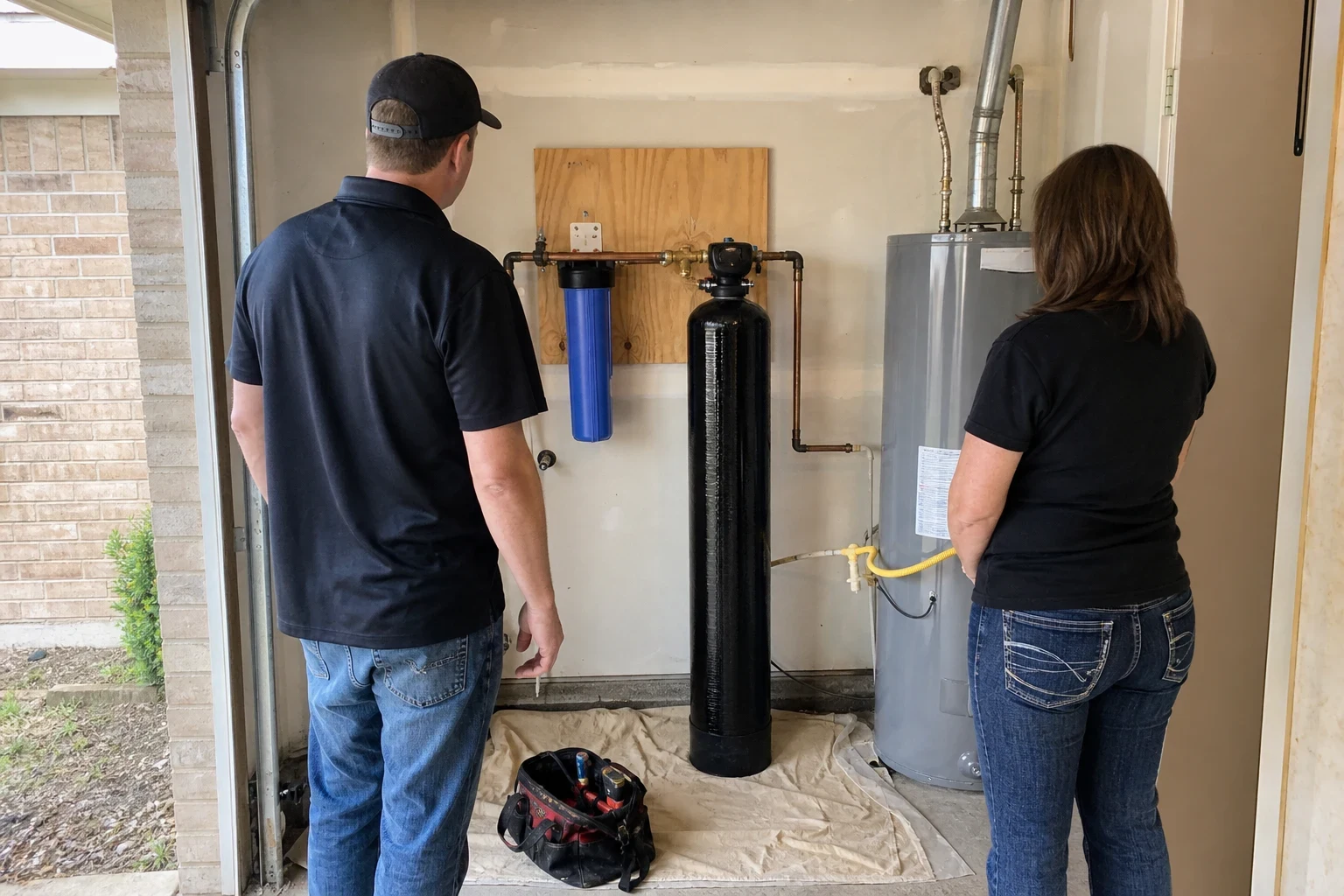
Get real numbers before you buy anything
One visit gives you hardness, disinfectant, iron and, if needed, lab lead results in writing. From there you decide, with no pressure to buy equipment.